

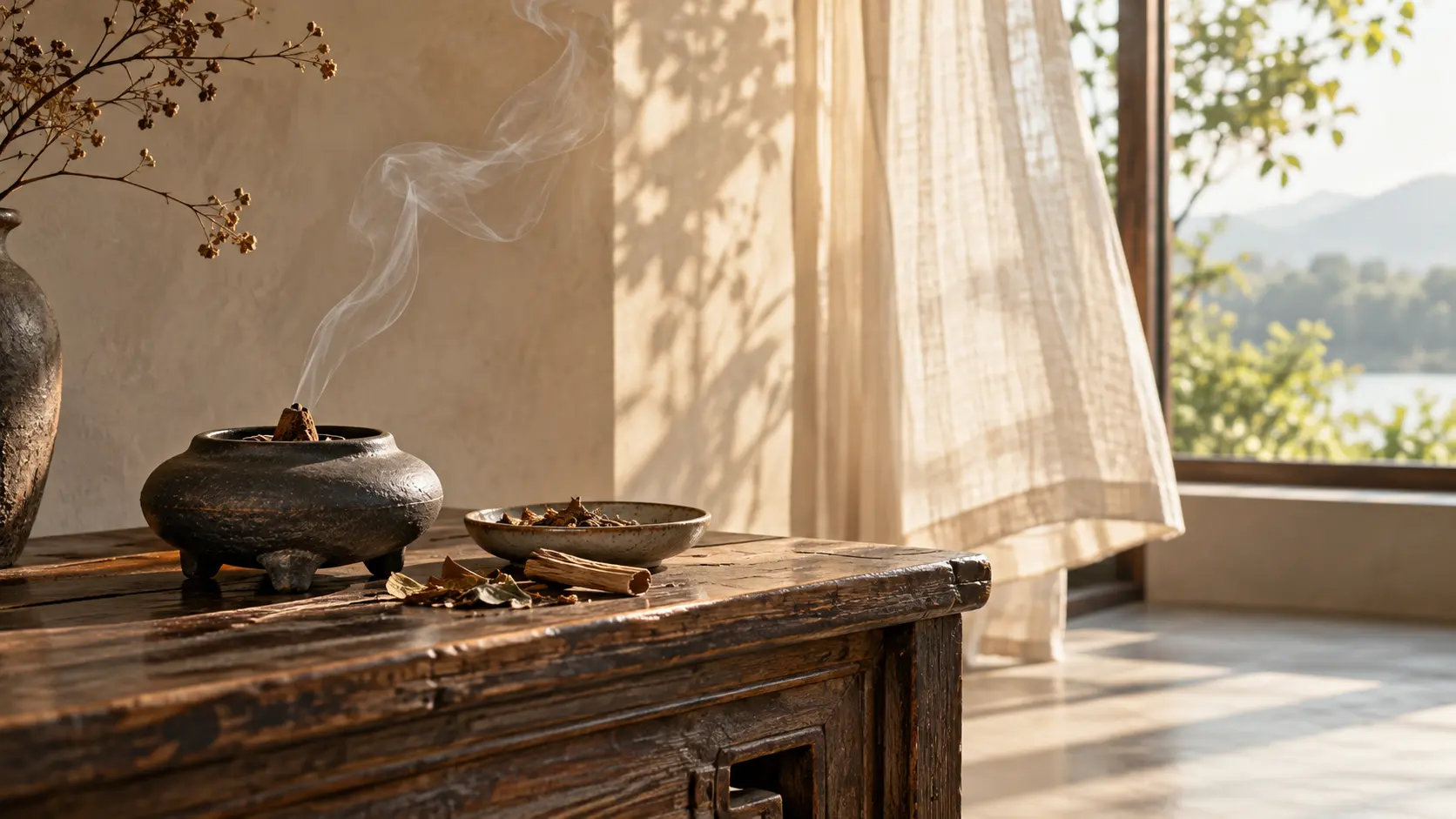
Long before incense became associated with home fragrance, it was burned with purpose.
Across cultures and generations, aromatic woods, resins, herbs and flowers have been used to prepare sacred spaces, honour important moments and bring a sense of order to the unseen atmosphere of a home. Incense marked a transition—from the ordinary to the intentional, from unrest to harmony, or from one chapter of life to another.
These traditions have never entirely disappeared. We still reach for incense when we want to slow down, begin again or change how a room feels. The setting may be modern, but the instinct behind the ritual is ancient.
1. Incense Was Never Just Home Fragrance
Today, incense is often described in the same language as candles and room sprays: floral, woody, fresh or calming. Its fragrance matters, but fragrance is only part of its story.
Traditionally, incense was a ritual material. It was burned during prayer, offerings, ceremonies and moments of transition. Fragrant smoke rising into the air carried symbolism—it could represent a prayer, an offering, a connection with ancestors or the clearing of what no longer belonged in a space.
Incense also helped people prepare themselves inwardly. The simple actions of selecting a material, lighting it and watching the smoke rise created a pause between one activity and the next. It signalled that a meaningful moment was beginning.
That is why burning incense can feel different from simply adding perfume to a room. It asks for our participation. We strike the match, place the incense in its holder and give the moment our attention. Through this small act, fragrance becomes ritual.
In a modern home, that ritual may happen before meditation, after cleaning, while preparing for sleep or at the start of a new week. It may last only a few minutes. What gives it meaning is not its complexity, but the intention behind it.
2. An Ancient Symbol of Purification and Protection
Purification and protection are among the oldest and most enduring meanings associated with incense.
In many traditions, fragrant smoke was used to prepare temples, homes and ceremonial spaces. Aromatic plants and resins were burned before prayer, after illness, during seasonal observances and at significant moments in family life. The ritual separated a protected, intentional space from the noise and uncertainty outside it.
Different cultures used different materials and followed their own practices. Resins, woods, leaves, flowers and carefully prepared incense blends all carried meanings shaped by local beliefs and family traditions. There has never been one single form of protective incense or one ritual shared by everyone.
What these practices often held in common was the belief that the atmosphere of a place mattered. A home was not merely a physical structure. It held memory, emotion and the traces of daily life. Incense offered a way to acknowledge that atmosphere and consciously renew it.
This meaning still resonates today. We may burn incense after moving into a new home, following a stressful day, when welcoming a new season or when life feels unsettled. The ritual gives us a way to say: this is my space; I am caring for it; I am choosing what I welcome into it.
Protection, in this sense, is not necessarily about fear. It is about creating boundaries, restoring a sense of safety and treating the home as a sanctuary.
3. What Does “Purifying a Space” Mean?
When we speak about purifying a space with incense, we are not claiming that smoke physically cleans indoor air. Ritual purification has a different meaning.
It is the intentional act of clearing what feels stale, heavy or no longer welcome and making room for something new. This may be understood spiritually, emotionally or symbolically, depending on your beliefs.
Sometimes the change is subtle but immediate. A familiar botanical fragrance replaces an unwanted odour. The movement of smoke or the gradual unfolding of aroma draws our attention back into the room. We open a window, tidy a surface and pause long enough to notice how the space feels.
These physical actions can support an inner shift. They help us move from tension to calm, from distraction to presence, or from an ending towards a beginning. The incense does not need to perform the entire transformation for us. It becomes the focus through which we express our intention.
For one person, purification may mean releasing the emotional weight of a difficult day. For another, it may be a traditional practice learned from family. It can also be a way to prepare for meditation, welcome guests, begin a new project or establish a peaceful evening atmosphere.
Direct-burning incense sticks and botanical bundles use fragrant smoke as part of the experience. Indirect incense warmers offer a gentler alternative by slowly heating aromatic woods, powders, resins or botanical blends rather than placing them directly in a flame. The methods feel different, but either can become an intentional ritual when used with awareness.
4. Do You Need to Follow an Exact Ritual?
There is no single universal incense ritual. Practices vary greatly between cultures, families and spiritual traditions. If you are following a particular religious or cultural practice, its customs deserve to be understood and respected.
If you are not following a specific tradition, however, a simple personal ritual can still carry meaning. You do not need to memorise complicated steps, use unfamiliar words or recreate a ceremony that does not belong to your experience.
Begin with a clear purpose. You may wish to release tension, refresh the feeling of a room, create a sense of protection or welcome a new beginning. Choose an incense stick or botanical blend that feels appropriate, use a suitable burner and allow the fragrance to become a reminder of that intention.
You may sit quietly, move mindfully through the room or simply let the aroma unfold while you continue with your day. There is no need to force a particular feeling. The ritual can be brief, private and entirely your own.
You also do not need to wait for a major life event. Incense can accompany the ordinary thresholds of daily life: returning home, finishing work, preparing for rest or resetting a room after a busy week. Repeated over time, these small moments can create a reassuring rhythm.
The ritual does not need to be elaborate to feel powerful. Its meaning comes from the material, the moment and the intention you bring to it.
We do not burn incense only because we enjoy its fragrance. We burn it to mark an intention—to cleanse, protect, welcome, release or begin again.
Next: Create a Modern Cleansing Ritual for Protection and Abundance
In the next journal, we will show you how to create a simple incense ritual for the modern home: how to prepare your space, choose your aromatic materials and set an intention for protection, renewal and abundance.
Abundance is not a promise of instant wealth. It is the practice of clearing space for opportunity, gratitude and purposeful action. Sometimes, welcoming something new begins with consciously releasing what no longer serves you.