Indirect Incense Heating: A Gentle Way to Experience Natural Fragrance

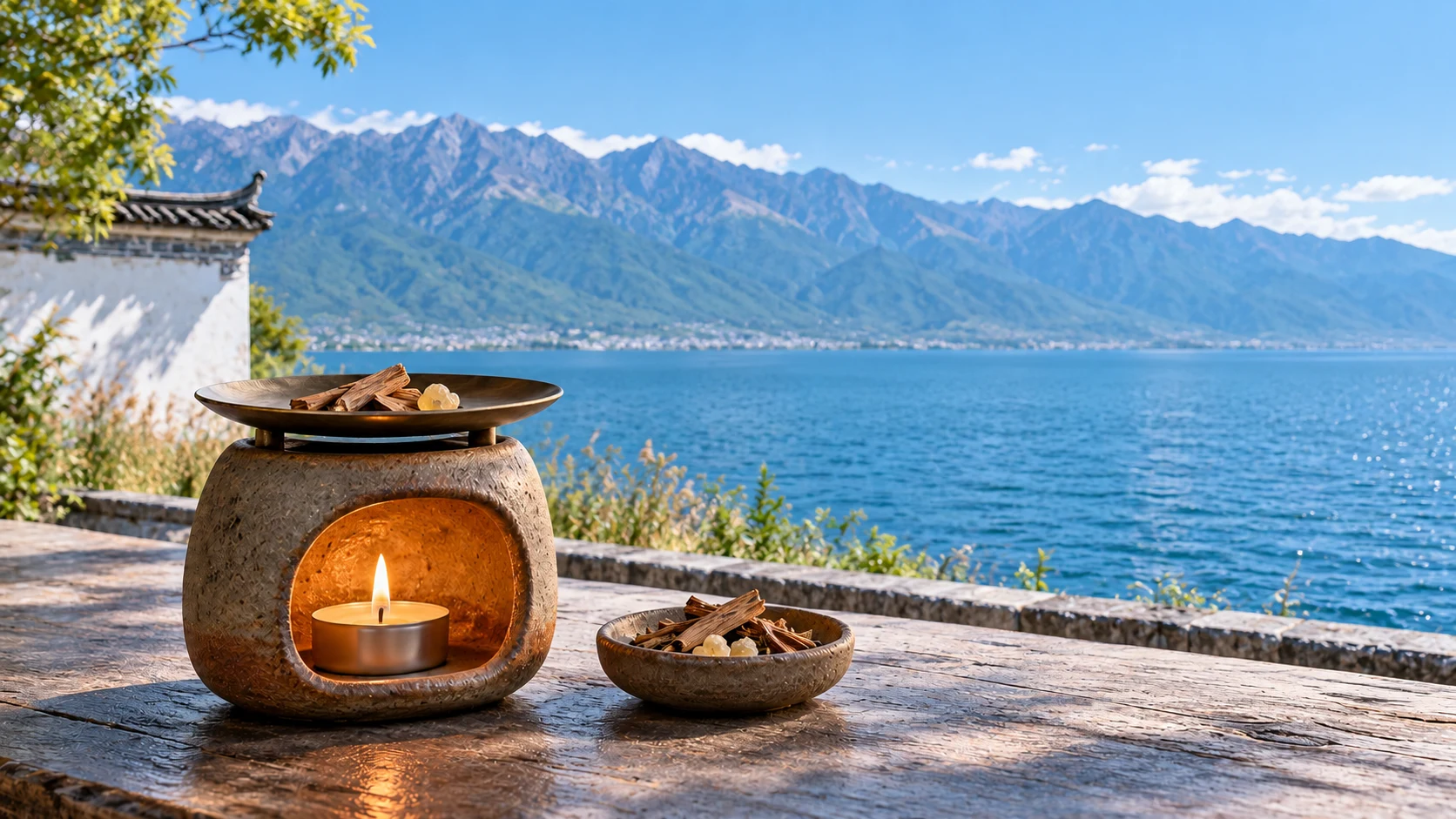
For anyone who finds traditional incense sticks too smoky or intense, indirect heating offers another way to bring fragrance and ritual into the modern home.
With indirect incense heating, aromatic material is placed above a heat source rather than directly in a flame. The gentle warmth releases its fragrance slowly, allowing woods, resins and botanicals to reveal their character without immediately turning to ash.
The result is quieter than conventional incense burning. There is usually less smoke, little ash from the aromatic material and more time to notice how the scent changes as it warms.
1. What Does “Indirect” Mean?
The principle is simple: the aromatic material and the flame are kept separate.
In a candle-powered warmer, a tealight sits inside the lower chamber. The material is placed in a heat-resistant dish or plate above it. The candle warms the dish, and the dish gradually warms the incense.
Traditional methods may use hot charcoal buried beneath ash, sometimes with a small plate or another barrier between the charcoal and the aromatic wood. Electric warmers create the same separation by using a controlled heating element instead of a flame.
2. An Old Principle in a Modern Form
In historical Japanese incense practice, a small piece of fragrant wood could be warmed above charcoal placed in ash. The preparation was deliberate: the heat encouraged the wood to release its fragrance without treating it like ordinary fuel.
Modern ceramic warmers simplify the same basic principle for everyday use. A candle, metal plate or ceramic dish replaces more specialised tools, making the experience accessible without requiring a formal ceremony.
3. Indirect Heating vs Direct Burning
Both methods have a place. The better choice depends on the material, the room and the experience you want.
| Direct burning | Indirect heating | |
|---|---|---|
| How it works | The incense smoulders after being lit | Heat reaches the material through a dish, plate or layer of ash |
| Typical materials | Sticks, cones, coils and products made to burn | Wood chips, resins, powders and dried botanical blends intended for warming |
| Smoke | Visible smoke is part of the experience | Usually little or no smoke from the aromatic material when correctly heated |
| Fragrance | Immediate and often stronger | Softer, slower and easier to observe in stages |
| Residue | Produces ash | Material dries, darkens or lightly chars depending on the heat |
| Control | Determined largely by the incense format | Can often be adjusted through quantity, distance and heating time |
4. Why Choose Indirect Heating?
A softer fragrance
Directly burned incense can fill a room quickly. Indirect heating is usually more restrained. It works well in smaller rooms or during moments when you want fragrance to remain in the background.
More of the material’s natural character
High heat can quickly produce a toasted or burnt note. Gentle warming allows you to notice lighter, sweeter or greener qualities before the material becomes deeply heated.
This is especially useful with complex materials such as agarwood, sandalwood, frankincense and layered botanical blends.
Less ash and visible smoke
Because the material is warmed rather than deliberately set alight, there is no stream of incense ash and usually much less visible smoke. This can make preparation and cleaning simpler.
A slower ritual
Indirect heating encourages patience. You add a small amount, wait for the dish to warm and notice how the aroma develops. The pause is part of the experience.
Greater flexibility
One suitable warmer may accommodate different aromatic materials. Some dual-purpose designs also include a separate ceramic dish for water and essential-oil diffusion. Always use the correct dish for each purpose rather than treating every insert as interchangeable.
5. What Can You Warm?
Use only clean aromatic materials sold or prepared for incense warming. Not every dried plant, resin or household ingredient is suitable for heating and inhalation.
Aromatic woods
Agarwood, sandalwood and cedar are commonly enjoyed as chips, shavings or small pieces. Begin with very little. Good aromatic wood does not need to cover the entire plate to be noticed.
Resins
Frankincense and other incense resins soften as they warm and may become sticky. Use a heat-resistant metal dish or another insert recommended for resin, and clean it after it has cooled.
Incense powder
Powder warms quickly because of its fine texture. Use a small pinch and watch the heat carefully. If it blackens almost immediately, the temperature is too high.
Dried botanicals
Purpose-made botanical blends may contain leaves, flowers, peels, spices or woods. Their aromas can change rapidly, so begin with a short session and remove the material if it starts to scorch.
Essential oils
Essential oils should not be dropped onto a dry metal incense plate unless the product is specifically designed for that use. Use a proper ceramic oil dish with water and follow the warmer’s instructions. Never allow the water to evaporate completely while the candle remains lit.
6. How to Use a Candle-Powered Indirect Incense Warmer
Step 1: Place the warmer safely
Set it on a stable, level and heat-resistant surface. Keep it away from curtains, paper, shelves, dried flowers and other flammable objects. Make sure the room has gentle ventilation but avoid strong drafts around the candle.
Step 2: Add a small amount of incense
Place a few wood chips, a small piece of resin, a pinch of powder or a small amount of botanical blend onto the correct heat-resistant plate.
Step 3: Light the candle
Use the candle size recommended for the warmer. Place it correctly inside the lower chamber, then confirm that the upper plate is secure.
Step 4: Allow time for the fragrance to appear
The scent may take several minutes to develop. Resist the urge to add more material immediately. At first, you may notice the lightest part of the aroma. Deeper and warmer notes appear as the plate reaches temperature.
Step 5: Adjust if necessary
If there is almost no fragrance after the warmer has had time to heat, check that the candle and plate are correctly positioned. If the material smokes heavily, blackens quickly or smells burnt, extinguish the candle and allow the warmer to cool.
Step 6: Finish and cool
Extinguish the candle when the session is complete. Leave every part of the warmer untouched until it has cooled fully.
7. What Should the Incense Look Like Afterwards?
Wood may become darker and drier. Resin may soften, bubble or leave residue. Botanicals may lose their colour and become crisp. A light toasted appearance can be normal.
Heavy smoke, rapid blackening or a harsh burnt smell usually means the material is overheating. Once the fragrance becomes unpleasant or fades, the session is finished.
8. Common Mistakes
Using too much material
More incense does not necessarily create a better aroma. Start small and add only after you understand how the warmer performs.
Expecting instant fragrance
Indirect heating is slower than lighting a stick. Give the plate time to warm before deciding that the aroma is too faint.
Using the wrong dish
Metal, ceramic and stone inserts handle heat differently. A dry incense plate and a water-based oil dish may look similar but serve different purposes. Follow the instructions supplied with the warmer.
Treating “natural” as automatically safe
Natural materials can still irritate, scorch or release unwanted compounds when overheated. Use products intended for aromatic warming and stop if you experience discomfort.
Leaving the warmer unattended
A gentle ritual still involves heat. Never leave a lit candle or operating electric warmer unattended, and keep it away from children and pets.
9. Is Indirect Heating Smoke-Free?
It is more accurate to describe indirect heating as low-smoke rather than guaranteed smoke-free.
When the aromatic material is kept below its burning point, it may release fragrance without visible smoke. However, excessive heat can cause woods, powders or botanicals to scorch. A candle-powered warmer also produces combustion emissions from the candle itself.
People with asthma, respiratory sensitivities, young children or pets may prefer shorter sessions, an electric warmer or no fragranced products in shared spaces.
Learning to Smell More Slowly
Indirect heating changes incense from something that simply fills a room into something you can observe.
The fragrance begins quietly. It develops, deepens and eventually fades. Each stage reveals something different about the material—and asks you to slow down enough to notice it.
You do not need specialist knowledge to begin. Start with one familiar wood or botanical blend, use a small amount and let the heat do its work gradually.
Next: How to Choose the Right Incense Burner
In the next journal, we will compare different kinds of incense burners —and help you choose the right design for your fragrance materials.